
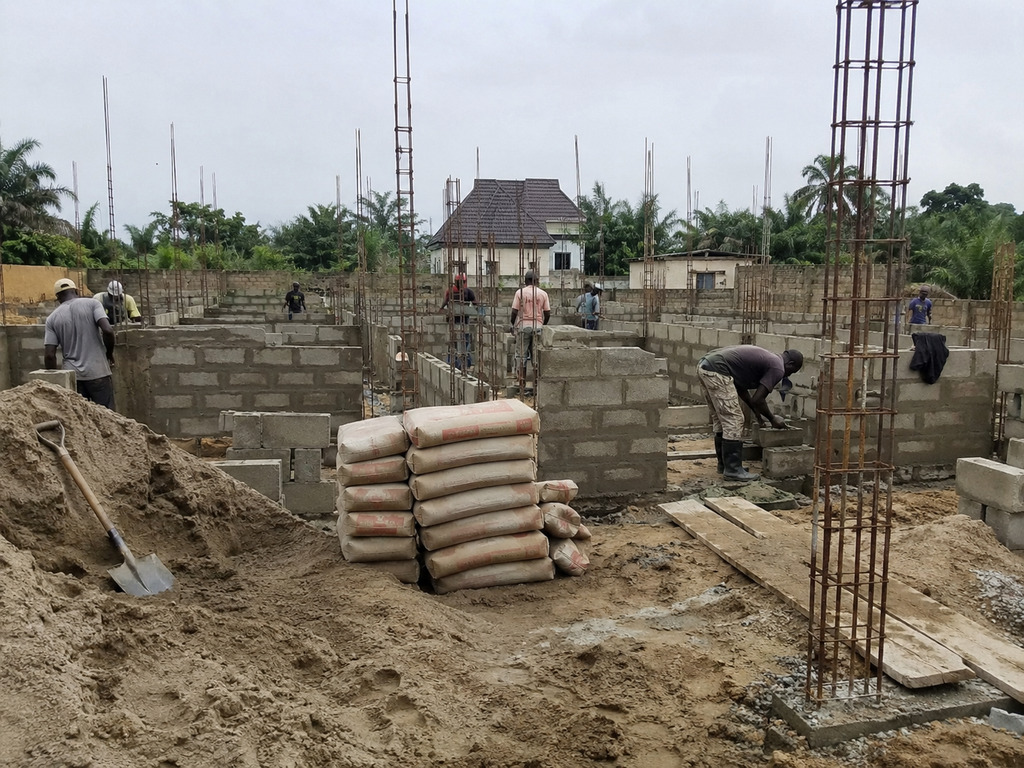
Obinna bought land in Elelenwo last year. Not a big plot, 600 square metres, but it is his and the papers are clean and every time he drives past it he feels something he has not put words to yet. Now he is ready to build. He has a rough budget in his head. He has a contractor someone from work recommended. He feels, for the first time in a while, like things are moving.
Here is what nobody told Obinna.
The land was the beginning of the money conversation, not the end of it. The building phase is where a lot of people who did everything right on the land purchase quietly lose grip on their finances. Not because they were careless. Because they did not know what they were walking into.
This is the conversation we have with clients at BEMD after the land is sorted. Because the land is only the first decision. The building is where the real numbers live.
The Cement Bags That Are Not Quite There
If your contractor is buying cement on your behalf and you are not watching, you are likely paying for more bags than arrive on site. This is not dramatic. It is just how it works. A contractor quotes you for 500 bags. He buys 420. The remaining 80 bags worth of money enters a different pocket.
In Port Harcourt right now, a bag of Dangote or BUA cement from a depot runs between N9,500 and N11,000 depending on the day and who you know. Retail open market is higher. If your contractor is buying at depot and charging you market rate, that margin belongs to him, not to your building.
What you do: buy your own cement. Or at minimum, visit the depot with him once and know the actual price before you authorise anything.
The Iron Rods Question Nobody Asks Until It Is Too Late
Reinforcement iron is where substandard materials cause actual structural damage, not just budget damage. There are rods in this market that look correct and are not. They are lighter than spec, thinner than the gauge they are sold as, and they will not hold what your building needs them to hold.
A tonne of Y16 iron rod from a reliable supplier in Trans-Amadi should cost you somewhere around N1.1 million to N1.3 million right now. If someone is quoting you significantly below that, ask why. If someone is quoting you significantly above that, also ask why.
Buy from suppliers you can verify. Ask for the mill certificate if you want to be serious about it. A contractor who discourages you from asking questions about materials is a contractor who is profiting from your silence.
The Sand and Granite Game
A tipper of sharp sand in Port Harcourt runs roughly N80,000 to N120,000 depending on location and source. Granite is higher. These numbers shift with fuel and with the road conditions between the quarry and your site.
The problem is not always the price. The problem is the quantity. A “full tipper” that arrives at your site at six in the evening, when you or your site supervisor is not there to measure it, is sometimes not a full tipper. Some drivers have modified their trucks. Some contractors share the difference with the driver.
Be on site for deliveries or have someone you trust on site. Keep a record of every delivery: date, quantity, supplier. This sounds tedious until you realise that a few short deliveries across a build can cost you the equivalent of two or three months of rent you were trying to escape.
Roofing: The Gauge Switch
Roofing sheets are sold by gauge, which refers to thickness. A thicker sheet is more durable and more expensive. A thinner sheet is cheaper and will give you problems faster.
What sometimes happens is that your contractor shows you a sample of the gauge you approved, and then the sheets that arrive on site are one gauge thinner. The difference per sheet might seem small. Across a full roof it is not small, and you will not notice until years later when the sheets start lifting or leaking or denting under harmattan pressure.
Know what gauge you approved. Specify it in writing. Check the sheets when they arrive before installation begins. Colour and appearance alone will not tell you the gauge.
Labour Quotes and the Diaspora Tax
If you have Lagos money, or foreign currency, or if you are perceived as someone who has been away and come back with resources, your labour quote will reflect that perception before it reflects the actual work.
Artisans in Port Harcourt are skilled and they deserve to be paid well. But there is a difference between paying well and being charged a premium because someone decided you can afford it. Get at least three quotes for any major trade: block laying, roofing, electrical, plumbing, tiling. Compare them. A quote that is significantly higher than the others is not automatically better quality.
For context, block laying in Port Harcourt currently runs around N150 to N200 per block depending on complexity. Electrical wiring for a standard three-bedroom can range from N800,000 to N1.5 million depending on the fittings specified. These are not fixed numbers but they give you a baseline to hold a conversation from.
Mobilisation Money and the Contractor Who Gets Busy
You give a contractor 30 or 40 percent mobilisation to start work. He starts. Then he slows. Then he has another job. Then he has a family situation. Then he needs more money before he can continue. And somehow the work done does not match the money collected.
This is one of the most common stories in self-build housing in Nigeria and it has less to do with contractors being dishonest and more to do with contracts being informal.
Structure the payment against milestones, not against dates or goodwill. Foundation complete, payment. Roofing complete, payment. Do not release money for work that has not been done. And put the schedule in writing even if it feels awkward. A contractor who is genuinely confident in his own work will not have a problem with this.
The Quiet Math
If you started planning this build two years ago with a budget of N25 million, that budget today probably builds what N18 or N19 million was building then. Materials inflation in Nigeria has not been kind. Every year of waiting is not neutral. It is a deficit.
That is not pressure. It is just arithmetic.
One More Thing
None of this is to say you should not build. You should build. Owning something physical in a city that will keep appreciating is one of the few financial decisions in Nigeria that genuinely compounds over time. Port Harcourt land values in Elelenwo, Rumuola, Woji, and GRA have not been sitting still. They have been moving.
The point is to build with your eyes open and your records kept. Know the numbers before the contractor does. Ask the questions that feel rude to ask. The house you are building is going to stand long after the awkwardness of one conversation is forgotten.
If you have questions about where to buy, what to expect in different neighbourhoods, or how to think about the finances of a build in Port Harcourt, you are welcome to reach out.
Call or WhatsApp: 08033359028 / 08027746528
www.bemdproperties.com
info@bemdproperties.com
No. 32 Ebara Road, Orazi, Port Harcourt


